🇬🇧 United Kingdom · Dessert
Traditional Northumbrian Singing Hinnies
By eatmundo · July 6, 2026
 🇬🇧 UKAI-generated image
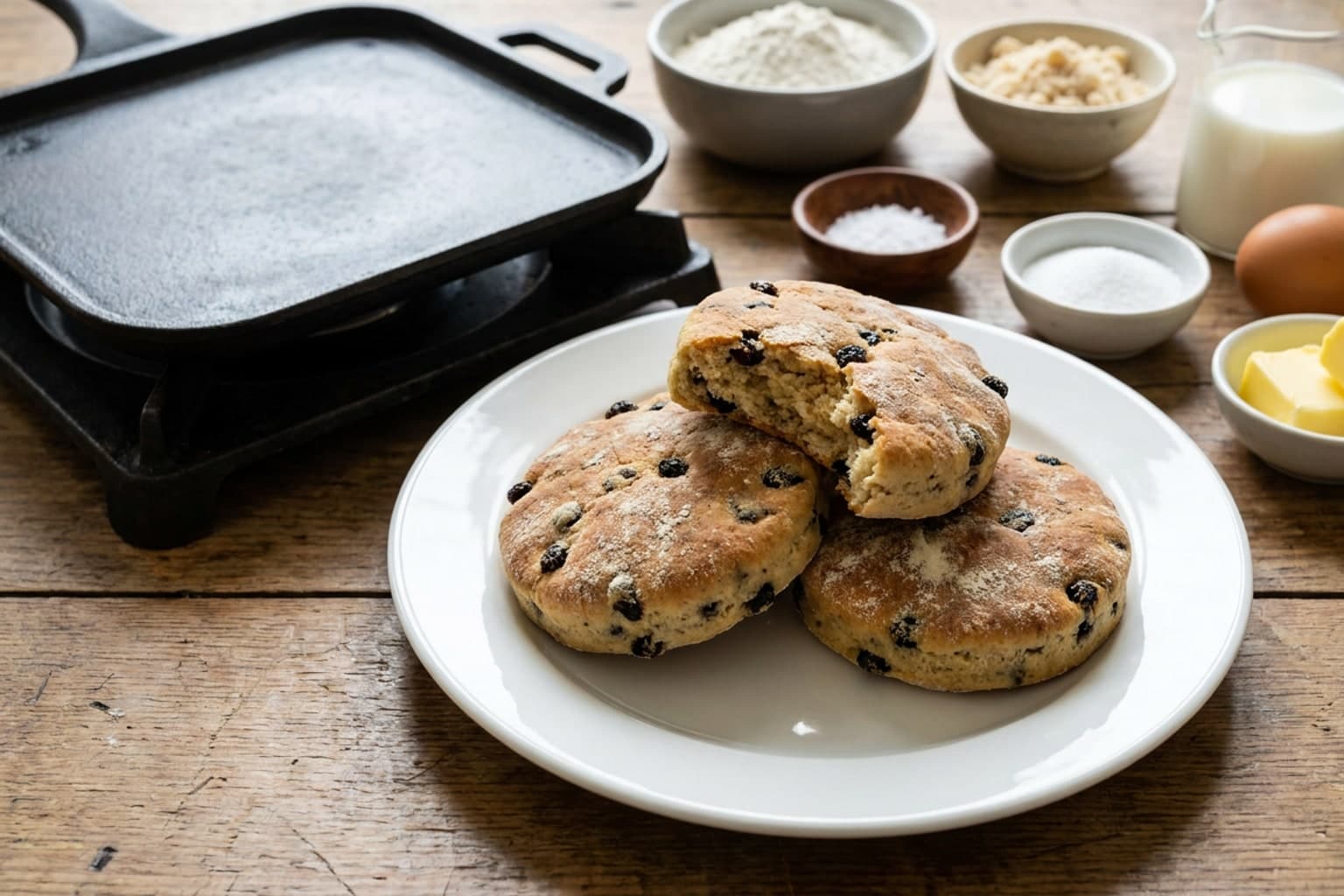
These delightful Northumbrian griddle cakes are similar to scones but richer, thanks to the addition of suet. They 'sing' (hiss) gently on the griddle as they cook, developing a tender crumb and golden crust. Perfect served warm with butter and a sprinkle of sugar.
Ingredients
check them off as you prepareHow to Make It
- 1
In a large bowl, combine 225g plain flour, 50g caster sugar, 1 teaspoon baking powder, and a pinch of salt. Ensure all dry ingredients are thoroughly mixed for an even rise.
- 2
Cut 50g cold butter (cubed) and 50g shredded beef suet into the flour mixture using your fingertips. Rub the fat into the flour until the mixture resembles fine breadcrumbs. This creates delicate pockets for a tender texture.
- 3
Make a well in the center of the mixture and add 1 lightly beaten large egg. Gradually add about 60-80ml of milk, a little at a time, mixing to form a soft, but not sticky, dough. Adjust with more flour if too wet.
- 4
Gently fold in 50g dried currants or sultanas, ensuring they are evenly distributed throughout the dough. Cover the bowl with cling film and chill in the refrigerator for 20 minutes; this helps the dough firm up and makes it much easier to handle.
- 5
Lightly flour a clean work surface and roll out the chilled dough to approximately 1cm thickness. Using a 6cm round cutter, cut out as many hinnies as possible. Gather any scraps, gently re-roll once or twice, and cut out more.
- 6
Heat a lightly greased heavy-bottomed frying pan or griddle over medium-low heat. Cook the hinnies for 3-5 minutes on each side until they are golden brown and cooked through. Listen closely, as they should swell slightly and 'sing' or hiss gently as they cook, a sign they're perfectly baked.
- 7
Transfer the Singing Hinnies to a wire rack to cool slightly. Serve them warm, generously spread with unsalted butter, and if desired, a light sprinkle of extra caster sugar. They are truly best enjoyed fresh from the griddle.
Frequently Asked Questions
What are Singing Hinnies?+
Singing Hinnies are a traditional Northumbrian griddle cake made from a mixture of flour, suet, butter, milk, sugar, and currants. They are typically served hot as a dessert or snack, traditionally cooked on a bakestone over an open fire.
What type of suet is best for Traditional Northumbrian Singing Hinnies, and are there any acceptable substitutions?+
For an authentic taste and texture, shredded beef suet is traditionally used, providing a rich flavor and crumbly consistency. While vegetable suet can be substituted for a vegetarian version, it may result in a slightly different, less rich mouthfeel.
How long should I cook Singing Hinnies, and what indicates they are perfectly done?+
Cook them on a moderately hot griddle or heavy-based frying pan for about 3-5 minutes per side. They are perfectly done when golden brown and slightly puffed, with a cooked-through center that feels springy.
What causes the "singing" in Singing Hinnies, and how can I ensure my hinnies make this sound?+
The "singing" is the sizzling sound made by the butter and suet melting and escaping the dough as the hinnies cook on a hot griddle. To achieve this, make sure your griddle is sufficiently hot and that your dough has a good amount of fat incorporated.
My Singing Hinnies sometimes turn out tough or dry; what is a common mistake I should avoid?+
A common mistake is overworking the dough, which develops the gluten too much, or using too much extra flour when rolling and shaping. Handle the dough gently and minimize flour dusting to keep them light and tender.
🇬🇧 UKAI-generated imageMundo Match
Dishes across the world that share Traditional Northumbrian Singing Hinnies's core ingredients.