🇪🇸 Spain · Food
Fabada Asturiana (Asturian Bean Stew)
By eatmundo · July 7, 2026
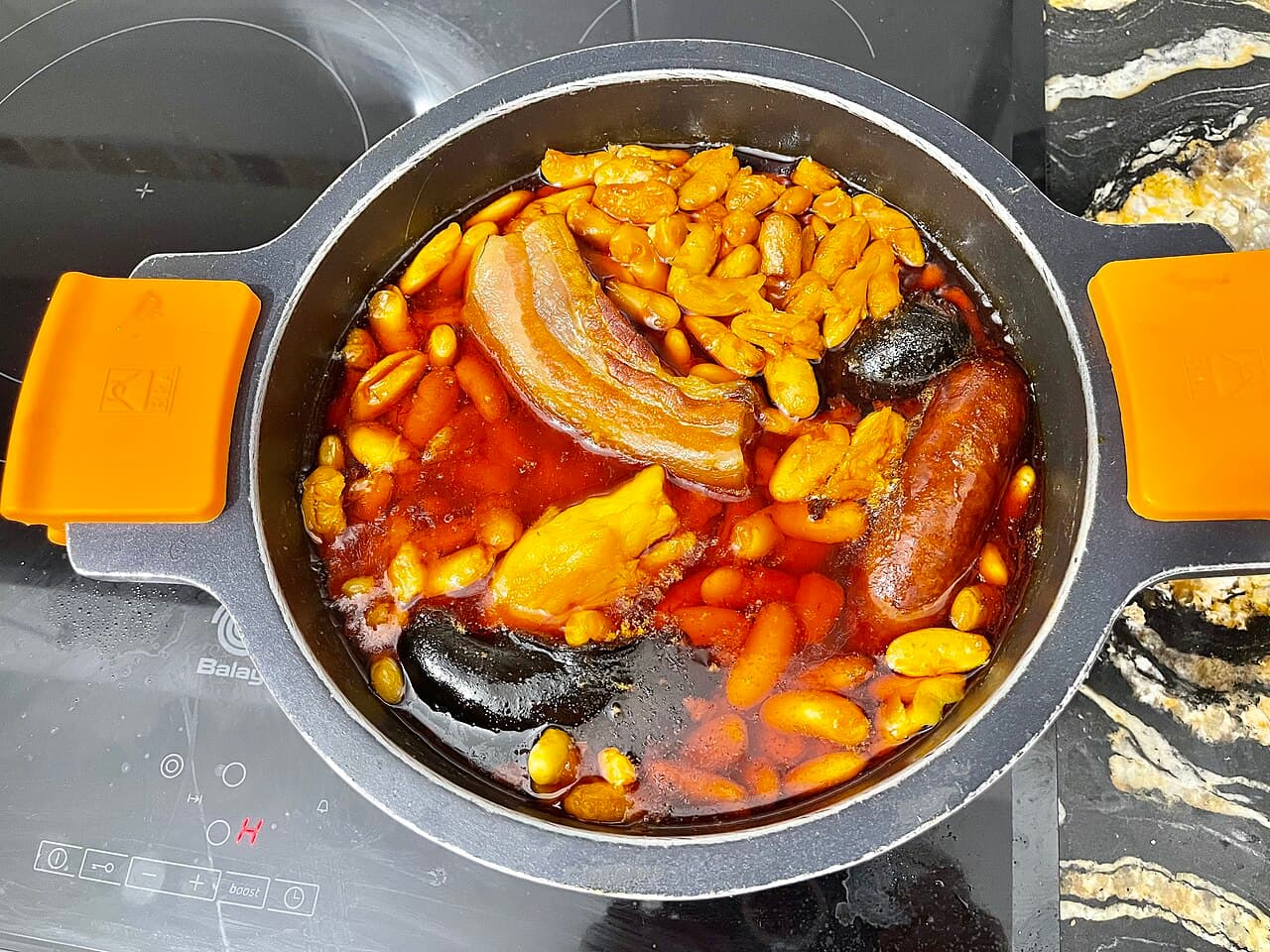
A hearty and comforting stew from the Asturias region, Fabada Asturiana features large white faba beans slowly simmered with an array of cured meats like Asturian chorizo, morcilla, and pancetta. This deeply flavorful dish is a cornerstone of Spanish winter cuisine, perfect for a chilly day.
Ingredients
check them off as you prepareHow to Make It
- 1
Begin by soaking 500g of dried faba beans in cold water for at least 12 hours, or overnight. This step is crucial for achieving their tender texture and reducing cooking time. Ensure they are fully submerged, and change the water once if soaking for longer.
- 2
Drain the soaked beans and place them in a large, heavy-bottomed pot or Dutch oven. Add 200g of pork shoulder, 200g of Asturian chorizo, 200g of Asturian morcilla, and 100g of streaky bacon (all whole pieces) to the pot with the beans.
- 3
Pour in 3 liters of fresh cold water, ensuring all ingredients are well covered. Bring the pot to a gentle boil over medium-high heat, then immediately reduce the heat to low. Skim off any foam that rises to the surface during this initial stage.
- 4
Add 1 large whole onion, 2 whole garlic cloves (peeled), and a pinch of saffron threads directly to the pot. Drizzle in 2 tablespoons of olive oil. These aromatics will slowly infuse the stew with wonderful depth of flavor as it simmers.
- 5
Continue to simmer the fabada gently for 2 to 2.5 hours, or until the beans are wonderfully tender and creamy, and the meats are cooked through. Resist the urge to stir vigorously, as this can break the delicate faba beans. Instead, gently shake the pot from time to time.
- 6
After the initial simmering, carefully remove the whole meats from the pot. Slice the chorizo and morcilla into thick rounds, and dice the pork shoulder and bacon into bite-sized pieces. Set them aside while you prepare the broth.
- 7
To thicken the stew slightly and incorporate more flavor, you can mash a small portion of the beans against the side of the pot with a wooden spoon. Alternatively, for a smoother finish, you can remove a ladleful of beans and broth, blend it, and return it to the pot.
- 8
Return the sliced and diced meats to the pot, stirring gently to combine. Season the fabada with salt to taste; remember, many of the meats are already cured and salty, so taste before adding. Allow it to simmer for another 15 minutes to let the flavors meld beautifully.
- 9
Serve your Fabada Asturiana piping hot in deep bowls, ensuring each serving gets a generous portion of beans and a mix of the delicious cured meats. It pairs wonderfully with a crusty piece of bread to soak up the rich broth. ¡Buen provecho!
Frequently Asked Questions
What is Fabada Asturiana?+
Fabada Asturiana is a rich bean stew originating from the Asturias region of Spain. It is composed primarily of large white faba beans simmered with pork shoulder, bacon, morcilla, and saffron, and is typically served as a hearty main course during cooler months.
What kind of beans are best for Fabada Asturiana?+
The authentic choice is 'Fabes de la Granja', large, creamy white beans from Asturias. If these are unavailable, large, high-quality dried cannellini or butter beans can be a suitable substitute for their similar texture and size.
How can I prevent the beans from breaking apart during cooking?+
To prevent the beans from breaking, avoid stirring them vigorously. Instead, gently shake the pot to distribute heat and ingredients. Also, add salt only towards the end of cooking, as early salting can toughen the bean skins and cause them to split.
Can Fabada Asturiana be prepared in advance or frozen?+
Yes, Fabada tastes even better the next day as the flavors deepen. It can be stored in the refrigerator for up to 3-4 days. It also freezes exceptionally well for up to 3 months; thaw it overnight in the fridge and reheat gently on the stovetop.
What are the essential meats for an authentic Fabada?+
The holy trinity of Asturian charcuterie is crucial: Asturian chorizo (a smoky, paprika-rich sausage), Asturian morcilla (a smoky blood sausage), and lacón (salted pork shoulder). Good quality streaky bacon or pancetta also adds depth.
Mundo Match
Dishes across the world that share Fabada Asturiana (Asturian Bean Stew)'s core ingredients.
See all 10 matches ↓