🇰🇷 South Korea · Food
Sundubu Jjigae (Korean Soft Tofu Stew)
By eatmundo · July 9, 2026
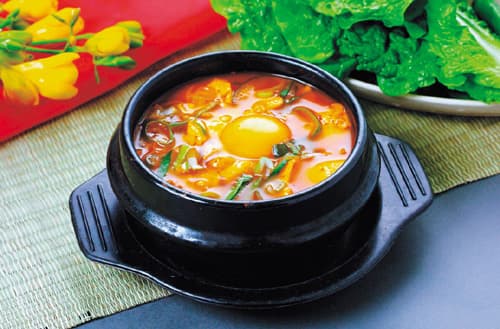
Sundubu Jjigae is a beloved Korean stew renowned for its silky-smooth, uncurdled soft tofu. This comforting dish typically features a spicy, savory broth with various ingredients like meat, seafood, and kimchi, all simmered together in a traditional earthenware pot. It's often served bubbling hot, perfect for a hearty meal.
Ingredients
check them off as you prepareHow to Make It
- 1
In a heavy-bottomed pot or dolsot (Korean earthenware pot) over medium heat, add 1 tablespoon of sesame oil. Sauté 100g of thinly sliced pork belly (or minced meat) until it's lightly browned, about 3-4 minutes. This renders fat and builds a foundational flavor.
- 2
Add 2 cloves of minced garlic and 1/2 cup of chopped aged kimchi to the pot. Stir-fry for 2-3 minutes until the kimchi softens and becomes fragrant. The aged kimchi provides a deeper, more complex sourness which is key to a good jjigae.
- 3
Stir in 2 tablespoons of gochugaru (Korean chili powder). Cook for about 30 seconds, stirring constantly, to bloom the chili powder and release its vibrant color and spice. Be careful not to burn it, as this can make the stew bitter.
- 4
Pour in 3 cups of water or anchovy broth. Add 1 tablespoon of soy sauce and 1/2 teaspoon of oyster sauce (if using) for extra umami. Bring the stew to a boil, then reduce the heat to medium-low and let it simmer for 5 minutes.
- 5
Carefully add 2 blocks of soft tofu to the stew. Use a spoon to gently break the tofu into large, irregular chunks directly into the pot. Avoid over-stirring at this stage to keep the tofu from disintegrating too much.
- 6
Let the stew simmer for another 5-7 minutes, allowing the tofu to absorb the flavors and the broth to deepen. You'll see the edges of the tofu start to firm up slightly while the center remains incredibly tender.
- 7
Just before serving, crack 1 large egg directly into the stew. You can gently poke the yolk to let it spread a little, or leave it whole for a richer yolk burst later. Garnish with 1 sliced green onion.
- 8
Serve the sundubu jjigae immediately in its bubbling pot, ideally with a bowl of steamed rice and a few simple banchan. The egg will continue to cook in the residual heat, becoming perfectly custardy by the time you dig in. Be mindful of the hot pot!
Frequently Asked Questions
What is Sundubu Jjigae?+
Sundubu Jjigae is a Korean soft tofu stew made with a base of garlic, soy sauce, sesame oil, oyster sauce, and kimchi. It is a staple dish typically consumed as a hot main course, often served in a clay pot for breakfast or dinner.
What type of soft tofu is best for Sundubu Jjigae, and how should it be prepared?+
For authentic Sundubu Jjigae, use very soft or silken tofu, often found in tubes or plastic packages, not firm blocks. Gently scoop or slice it into the stew without draining to maintain its delicate texture.
How thin should the pork belly be cut for this stew, and can I use a substitute if I don't eat pork?+
Slice the pork belly thinly, about 1/4 inch (0.5 cm) thick, to ensure it cooks quickly and renders its fat to flavor the broth. For a substitute, thinly sliced beef (e.g., brisket or ribeye) or even mushrooms (like shiitake) can be used, though the flavor profile will differ slightly.
What kind of kimchi is ideal for Sundubu Jjigae, and does its age matter?+
Use well-fermented, sour napa cabbage kimchi, as its developed acidity and complex flavors are crucial for the stew's depth. Older, sour kimchi is generally preferred over fresh kimchi for a richer broth.
How can I adjust the spice level of Sundubu Jjigae, specifically regarding gochugaru?+
To adjust the spice, start with the recommended amount of gochugaru and add more in small increments if you prefer a spicier stew. For less heat, reduce the gochugaru and consider adding a pinch of sugar to balance the flavors.
Mundo Match
Dishes across the world that share Sundubu Jjigae (Korean Soft Tofu Stew)'s core ingredients.
See all 10 matches ↓