By eatmundo · August 3, 2026
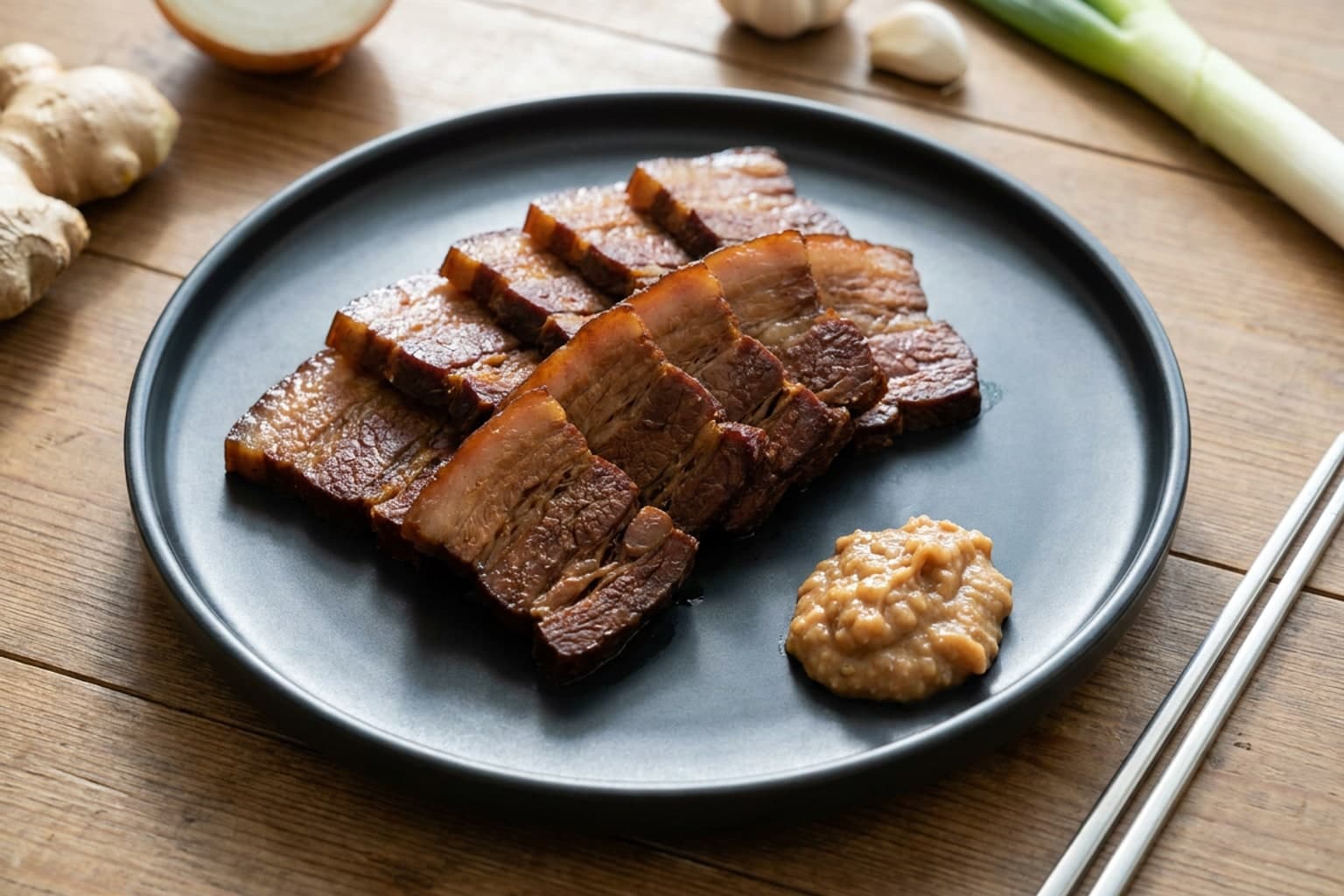 🇰🇷AI-generated image
Same ingredients, elsewhere in the world
5 matchesDishes from other countries' kitchens, made from the same core ingredients as Coffee-Infused Suyuk. The percentage is the share of ingredients the two recipes have in common.
 GomenIn Ethiopia · same ingredients· Same technique50%
 Fasolia AlichaIn Ethiopia · same ingredients50%
 Pork Binakol (Coconut Chicken style with Pork)In the Philippines · same ingredients50%
A refined version of traditional boiled pork belly, infused with coffee and aromatics to eliminate any gaminess. The result is succulent, melt-in-the-mouth slices served with crisp cabbage wraps.
According to eatmundo's ingredient comparison, the closest dish to Coffee-Infused Suyuk from another cuisine is Gomen (Ethiopia): the two share 50% of their ingredients.
Ingredients
tick what you already have - the rest goes on your shopping listHow to Make It
- 1
Place 600g pork belly in a large pot with 2 liters of water.
- 2
Add the onion, ginger, leeks, and garlic cloves to the water to build the aromatic base.
- 3
Stir in 3 tablespoons of soybean paste and 1 teaspoon of coffee grounds to infuse the broth.
- 4
Bring the liquid to a rolling boil over high heat, then reduce to a gentle simmer for 40 minutes.
- 5
Check for doneness by piercing the meat with a chopstick; if it slides through easily, it is ready.
- 6
Remove the meat from the pot and let it rest on a cutting board for 10 minutes to lock in juices.
- 7
Slice the pork into 5mm thick pieces using a sharp knife.
- 8
Arrange beautifully on a platter and serve immediately while warm.
Frequently Asked Questions
What is Coffee-Infused Suyuk?
Coffee-Infused Suyuk is a Korean boiled pork belly dish seasoned with coffee beans and aromatics like ginger and garlic. It is typically consumed as a communal main course.
Why add coffee to the boiling water?
Coffee helps neutralize the strong scent of the pork and imparts a subtle, earthy richness.
Can I use pork shoulder instead?
Yes, but it will be leaner and requires shorter cooking time to prevent becoming tough.
How do I know when the pork is perfectly cooked?
The meat should be tender enough to yield easily when pressed but not falling apart into mush.
What should I serve with this?
Serve with fresh salted Napa cabbage leaves, ssamjang sauce, and spicy radish kimchi.
🇰🇷AI-generated image