German Cheesecake (Käsekuchen) vs Koulourakia: Traditional Greek Butter Cookies
See how these two dishes stack up, ingredient by ingredient.
 🇩🇪 DE
🇩🇪 DEGerman Cheesecake (Käsekuchen)
View full recipe →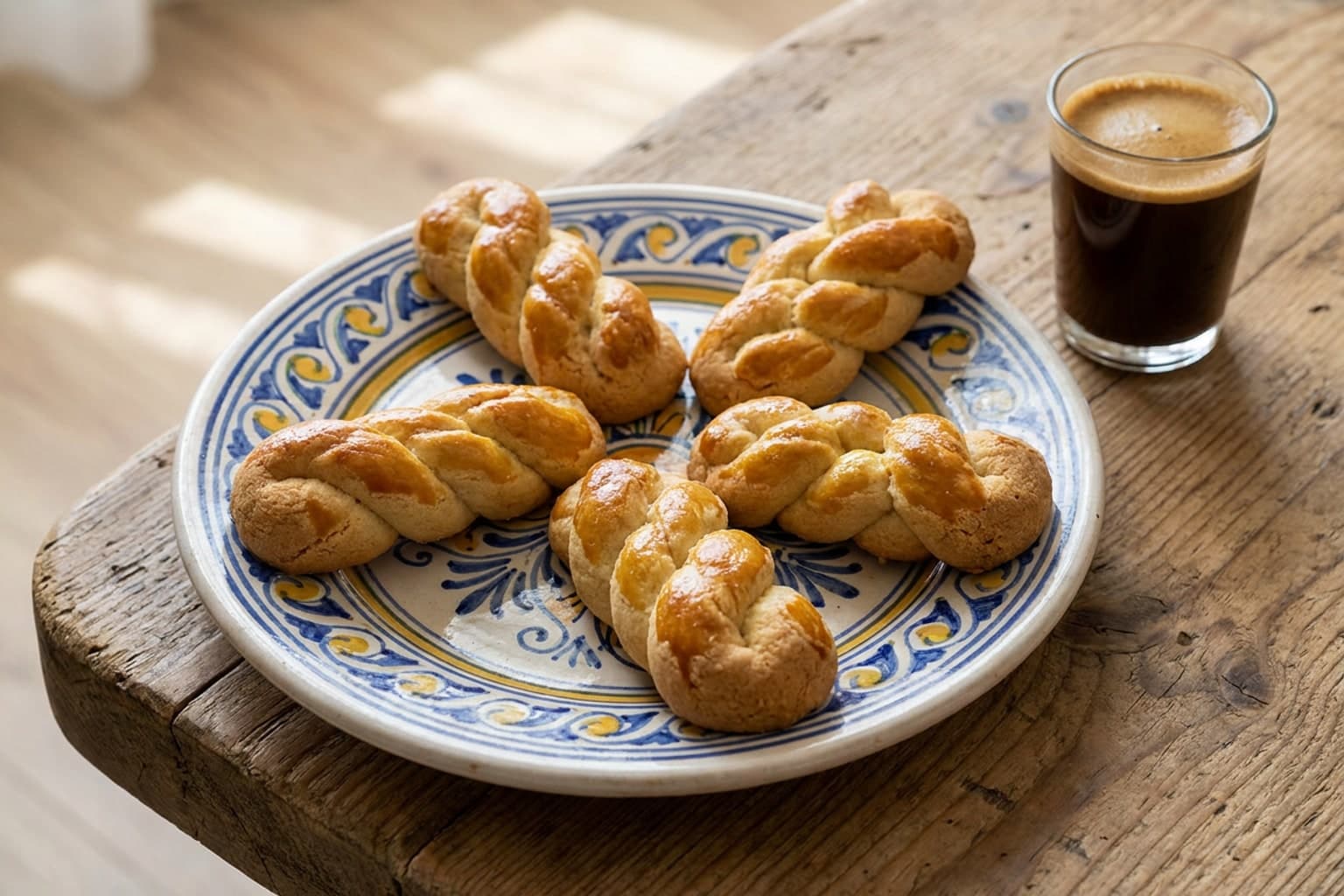 🇬🇷 GR
🇬🇷 GRKoulourakia: Traditional Greek Butter Cookies
View full recipe →63%mundo
These two desserts represent distinct approaches to rich, sweet baking. The German cheesecake relies on creamy quark and lemon zest for a tangy, velvety structure, while the Greek butter cookies use orange and baking powder to achieve a snappy, crisp texture. Although both share a foundation of butter, sugar, and egg, the cheesecake highlights the structural potential of dairy proteins, whereas the cookies focus on the bright, aromatic profile of citrus zest within a firm, crumbly dough.
Prep time, calories & servings
German Cheesecake (Käsekuchen)
⏱ 30 min
A relaxed effort
🔥 400 kcal
Nicely balanced
🍽 12 servings
Feeds a crowd
Koulourakia: Traditional Greek Butter Cookies
⏱ 40 min
A relaxed effort
🔥 120 kcal
Light bite
🍽 25 servings
Feeds a crowd
What they have in common
Milk
Milk
Sugar
Sugar
Butter
Butter
Egg
Egg
Vanilla extract
Vanilla Extract
What's different
Only in German Cheesecake (Käsekuchen)
- Cornstarch
- Quark
- Lemon zest
- Egg yolk
Only in Koulourakia: Traditional Greek Butter Cookies
- Baking Powder
- Orange Zest