By eatmundo · September 8, 2026
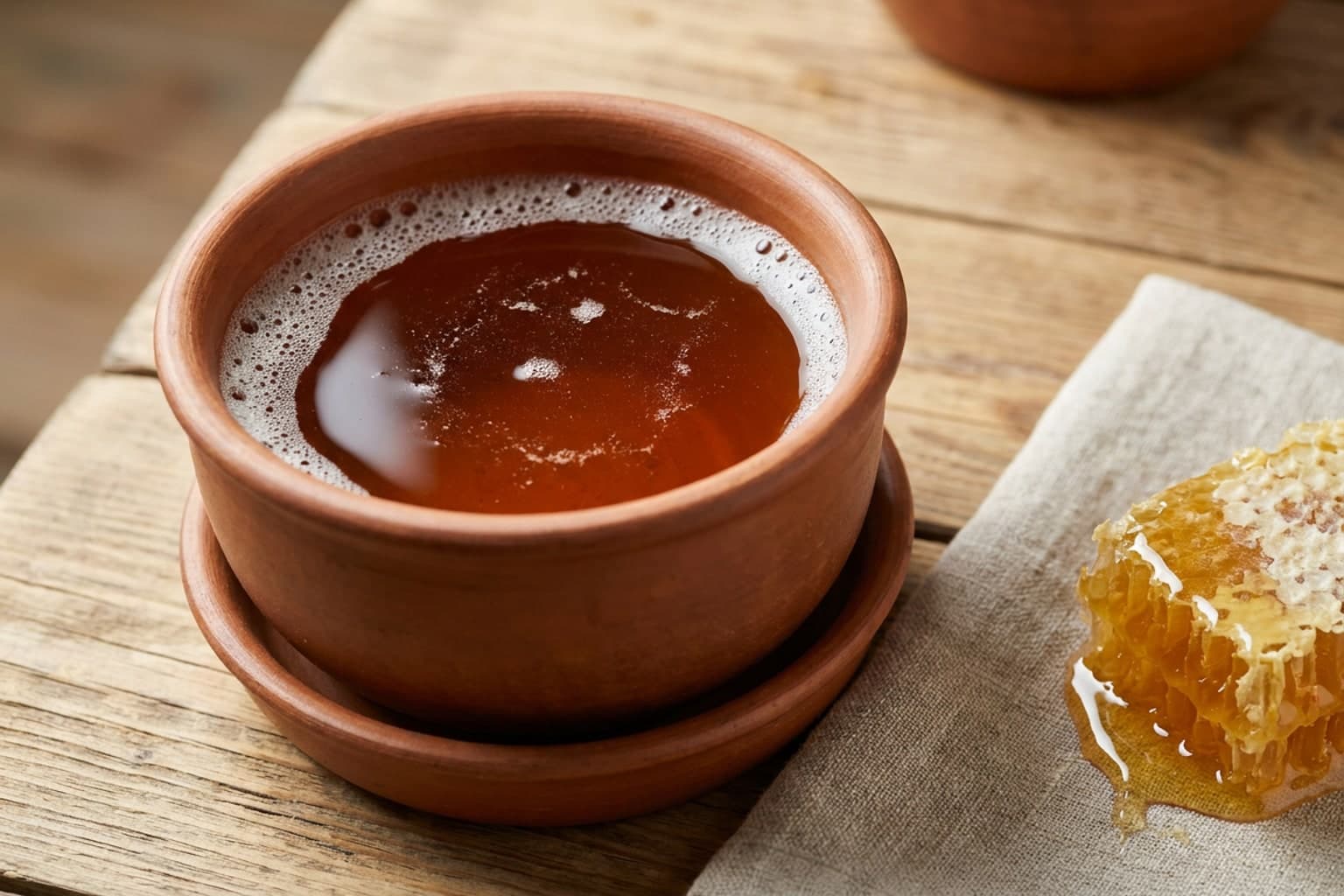 🇷🇺AI-generated image
Same ingredients, elsewhere in the world
2 matchesDishes from other countries' kitchens, made from the same core ingredients as Medovukha. The percentage is the share of ingredients the two recipes have in common.
 Traditional English MeadIn the United Kingdom · same ingredients· Same technique50%
 Boza (Traditional Turkish Fermented Drink)In Türkiye · same ingredients25%
An ancient Russian honey-based fermented beverage. It is a sweet, mildly alcoholic drink flavored with aromatic herbs and spices.
According to eatmundo's ingredient comparison, the closest dish to Medovukha from another cuisine is Traditional English Mead (United Kingdom): the two share 50% of their ingredients.
Ingredients
tick what you already have - the rest goes on your shopping listHow to Make It
- 1
Boil 2 liters of water in a large pot.
- 2
Stir in 500g of honey until fully dissolved, skimming off any foam that rises to the surface.
- 3
Add 1 teaspoon of hops to the boiling liquid and simmer for 5 minutes.
- 4
Remove from heat and cool the mixture to 30°C (86°F).
- 5
Dissolve 5g of yeast in 50 ml of warm water (30°C) and stir it into the honey base.
- 6
Pour into a glass demijohn and seal with an airlock.
- 7
Keep in a dark place at room temperature (20–24°C) for at least 14 days. Fermentation is finished when the airlock has shown no bubbles for 2 full days and the liquid has begun to clear. Do not bottle earlier: unfermented sugar will build pressure in sealed bottles.
- 8
Carefully siphon the clear medovukha off the sediment into clean bottles, seal, and refrigerate for one week before drinking.
Frequently Asked Questions
What is Medovukha?
Medovukha is a traditional Slavic fermented drink made primarily from honey, water, yeast and hops. It is often referred to as a type of mead and historically served during celebrations.
Is it alcoholic?
Yes. Fermented to completion as in this recipe, it reaches 8% to 9% alcohol, similar to a light wine.
Can I use any honey?
Linden or wildflower honey works best, as they provide a fragrant, floral depth to the drink.
Is an airlock necessary?
An airlock is recommended to let CO2 escape while preventing contamination from airborne bacteria.
How do I know when it is ready?
It is ready for bottling when the airlock has shown no bubbles for 2 full days and the liquid has become clearer, usually after 14 days or more.
🇷🇺AI-generated image