The Bitter Solution: Convergent Evolution in Honey Ferments
The dishes
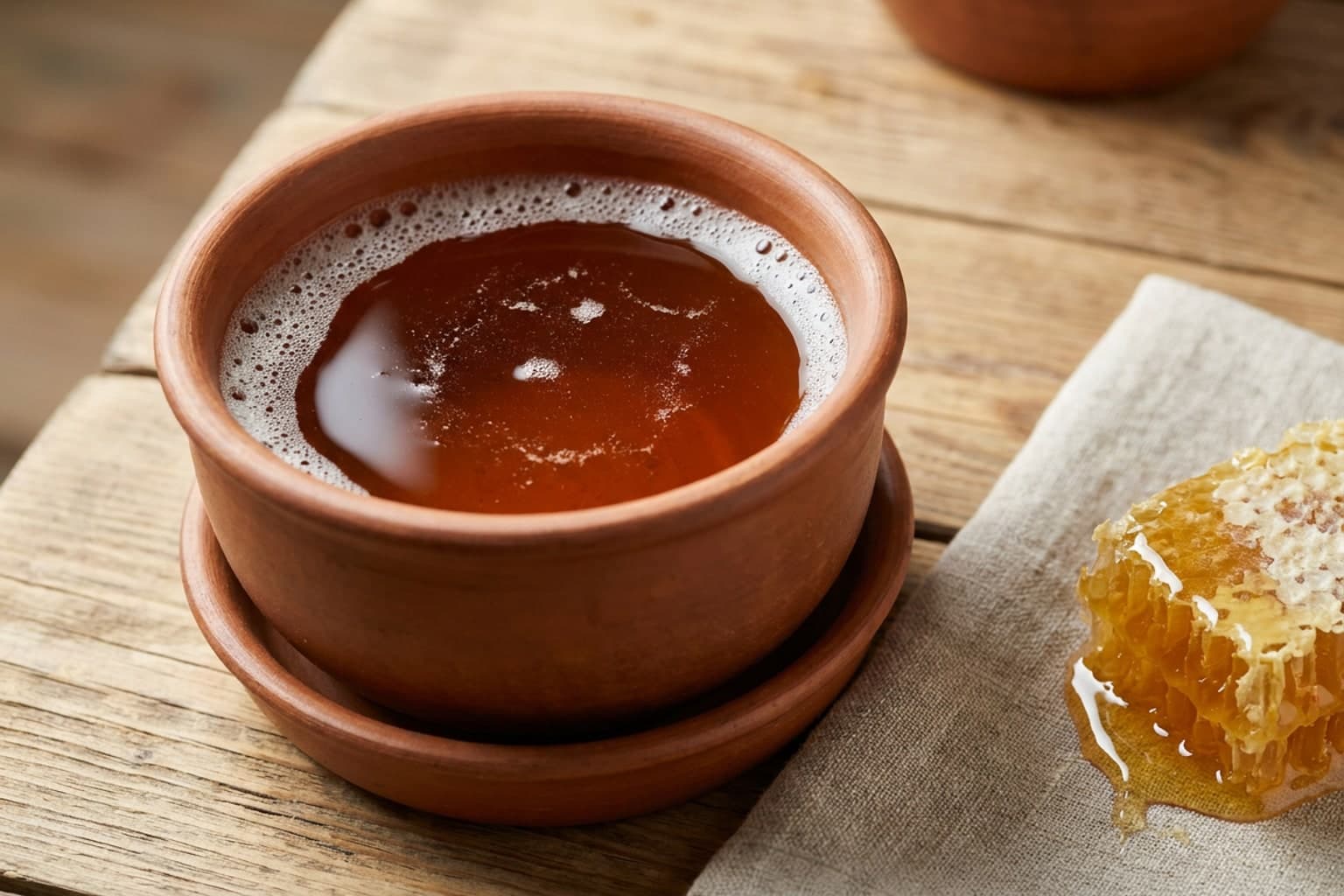
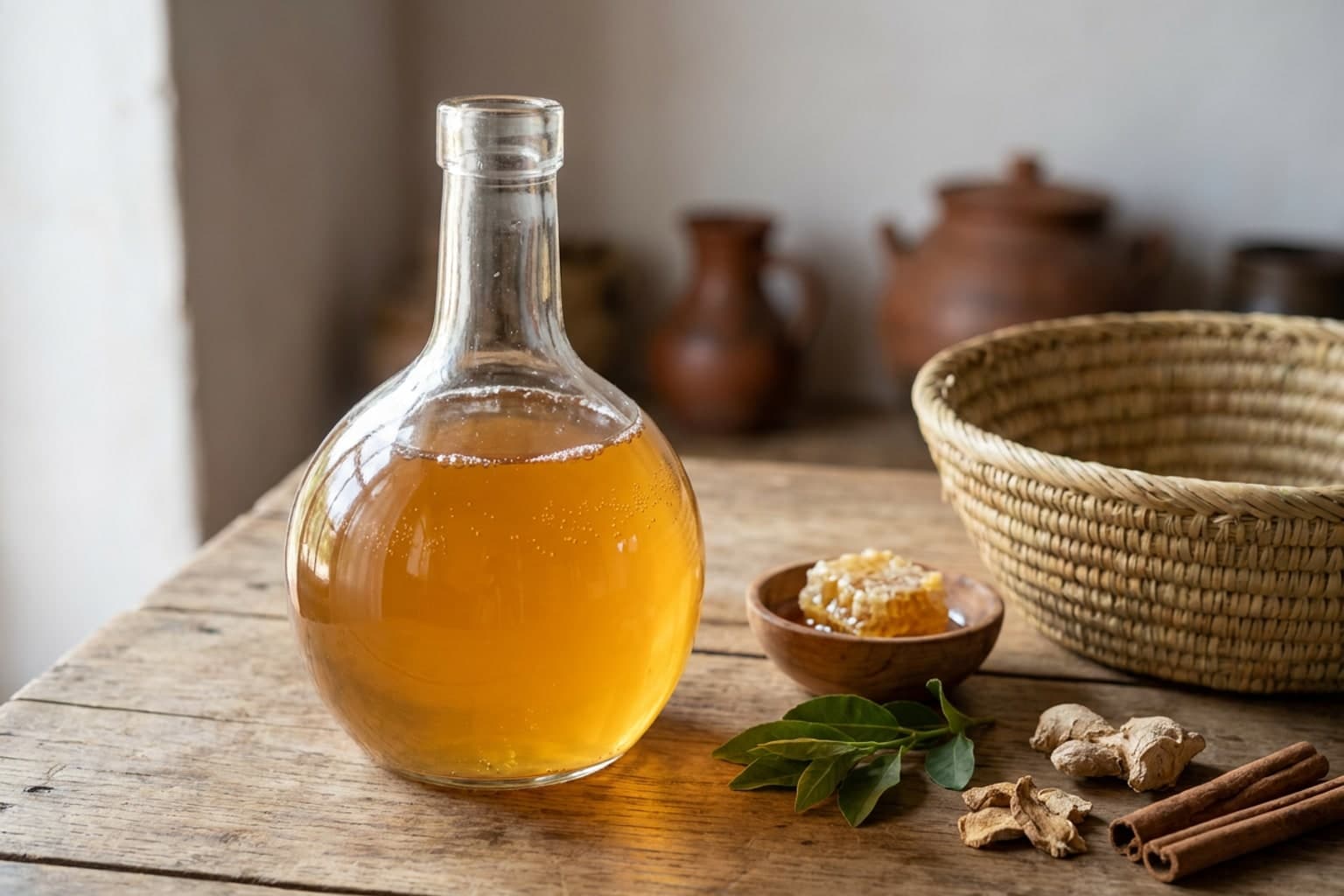
When we look at the world’s fermented beverages, honey stands as one of the most primal foundations. Yet, a raw honey-and-water solution left to ferment is rarely a balanced drink. Without intervention, it tends to be cloying, one-dimensional, and flat. Across vast distances and distinct ecological zones, brewers in Ethiopia and Russia independently encountered this same sensory obstacle. They arrived at their respective solutions not through cultural exchange, but through the parallel application of botanical chemistry to balance the sugar of the hive.
In the highlands of Ethiopia, the traditional drink is tej, a golden honey wine often served in a berele, a glass flask with a rounded base and long, slender neck. The character of tej is defined by gesho, the stems and leaves of Rhamnus prinoides. This local shrub is not merely an optional flavoring; it is the fundamental structural component of the drink. By steeping dried gesho in the fermenting honey solution, brewers introduce a complex bitterness that acts as a counterweight to the sugar. The result is a profile that is surprisingly dry, with a distinct, slightly tannic herbal edge that keeps the palate refreshed.
Thousands of kilometers to the north, in the forests and plains of Russia, the tradition of medovukha provides a striking functional mirror. Here, the brewer’s pantry relies on hops, the flowers of Humulus lupulus, to achieve the same corrective balance. While the recipe used here involves the addition of cultivated yeast to ensure a consistent ferment, the goal remains identical to the Ethiopian model: the modulation of sweetness. Hops introduce a cleaner, resinous bitterness that cuts through the residual sugar, providing a structured, sharp profile that elevates the liquid from a simple syrup into a crisp, invigorating beverage.
The shared DNA of these two drinks is found in their method rather than their ingredient list. When we calculate the ingredient overlap between tej and medovukha, we arrive at a figure of just 29 percent. By the standards of this site, which requires a 50 percent overlap to declare a 'match,' this pair falls significantly short. That number is not a mistake; it is the most revealing part of the story. It proves that the similarity between these drinks exists entirely in the technique of bittering, and that this technique is a universal solution to a specific biological problem.
Honey ferments are not rare historical curiosities; they have emerged spontaneously across almost every region where bees are found. Because honey is so intensely sweet, any society attempting to ferment it eventually hits the same wall: the product is too sweet to be sessionable. In Ethiopia, the environment provided Rhamnus prinoides, while in Russia, the climate favored Humulus lupulus. Neither culture needed to learn from the other to realize that adding a bitter botanical could manage the residual sugar, control microbial spoilage, and add an aromatic layer of complexity.
Gesho and hops occupy the same functional niche in their respective traditions. They are the chemical regulators of the fermentation vat. In tej, the gesho provides the structural tannins that create the drink's signature 'bite' and keep the fermentation clean. In medovukha, the hops provide the essential oils that suppress unwanted bacteria while contributing that familiar, resinous quality that makes the drink feel intentional and refined. They serve the same purpose: transforming a raw, sugary ferment into a balanced, complex beverage.
To hold a berele of tej is to engage with an ancient, high-altitude tradition, just as sipping a glass of medovukha connects one to the historic brewing practices of the Slavic world. While the physical ingredients—the honey, the water, and the specific shrubs—are as different as the landscapes they come from, the logic of the brewing process is an echo. We see here a clear example of convergent evolution in human culture, where the same biological problem—the overwhelming sweetness of honey—is solved by two distant traditions looking at their local flora and finding the same bitter answer.