By eatmundo · August 4, 2026
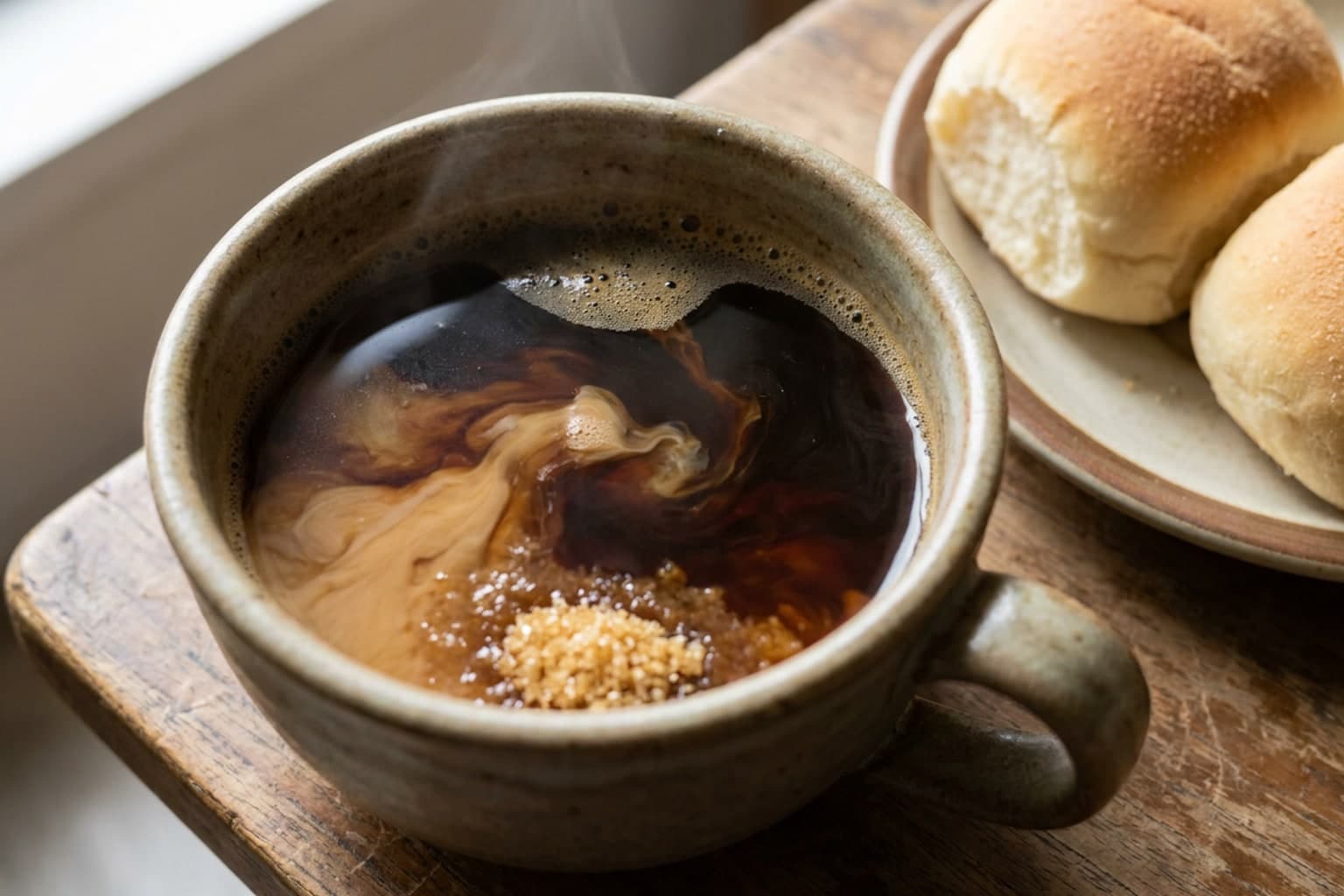 🇵🇭AI-generated image
Same ingredients, elsewhere in the world
5 matchesDishes from other countries' kitchens, made from the same core ingredients as Kapeng Barako. The percentage is the share of ingredients the two recipes have in common.
 Thai Iced Coffee (Oliang)In Thailand · same ingredients57%
 Kopi PengIn Malaysia · same ingredients57%
 Turkish CoffeeIn Türkiye · same ingredients50%
A robust and bold coffee from the Batangas region, known for its intense aroma and deep, punchy flavor. Often served sweetened with local brown sugar, it is the quintessential wake-up drink in the Philippines.
According to eatmundo's ingredient comparison, the closest dish to Kapeng Barako from another cuisine is Thai Iced Coffee (Thailand): the two share 57% of their ingredients.
Ingredients
tick what you already have - the rest goes on your shopping listHow to Make It
- 1
Bring 500ml of water to a rolling boil in a small pot or kettle.
- 2
Add 4 tablespoons of coarsely ground Barako coffee beans directly into the boiling water.
- 3
Turn off the heat immediately and let the coffee steep for 5 minutes, allowing the grounds to settle.
- 4
Use a fine-mesh strainer or a cloth filter to carefully decant the coffee into mugs.
- 5
Stir in 1 tablespoon of brown sugar per mug, adjusting to your sweetness preference.
- 6
Pour 30ml of evaporated milk into each cup for a creamy, balanced finish.
- 7
Serve immediately while piping hot to enjoy the deep, earthy aromas.
- 8
If you prefer a cleaner cup, let it rest for another minute before pouring to ensure the finest grounds settle at the bottom.
Frequently Asked Questions
What is Kapeng Barako?
Kapeng Barako is a strong coffee beverage originating from the Philippines, made from Liberica coffee beans brewed with water. It is typically served hot and often sweetened with brown sugar or tempered with evaporated milk, commonly consumed as a morning or midday drink.
Can I use regular coffee beans?
Barako is a unique Liberica bean; while regular coffee can be used, it won't have the distinct 'punch' that Barako is famous for.
Why is it served with evaporated milk?
It is a traditional way to balance the strong, acidic nature of the Barako bean with a creamy texture.
Is it stronger than espresso?
It is not necessarily stronger in caffeine, but it is known for its heavy body and very bold flavor profile.
Can I make this in a French press?
Yes, a French press works perfectly and simplifies the straining process.
🇵🇭AI-generated image