The Infinite Variation of Water and Leaf: A Tale of Two Teas
The dishes

In the vast, sprawling catalog of human gastronomy, we often find ourselves dazzled by fusion or historical diffusion, where a spice or a technique travels the Silk Road to transform a distant palate. Yet, there is a quieter, more profound magic in convergent evolution. When two civilizations, separated by thousands of miles and distinct cultural tapestries, arrive at the exact same destination using the exact same two building blocks—water and tea leaf—it reminds us that we are all, at our core, seekers of the same simple pleasures. The Turkish Black Tea (Çay) of Turkey and the Classic Sencha Tea of Japan stand as a beautiful testament to this minimalist mastery.
Consider first the Turkish Black Tea (Çay), a beverage that serves as the lifeblood of Turkish social interaction. In the bustling tea gardens of Istanbul or the quiet village squares of the Anatolian heartland, water and black tea leaves are married in a double-teapot system, the çaydanlık. It is a ritual of patience, where the water is brought to a rolling boil and then used to steep the leaves into a dark, amber-hued nectar. The result is a bold, astringent infusion that demands to be sipped slowly, bridging gaps between strangers and cementing friendships over the course of hours.
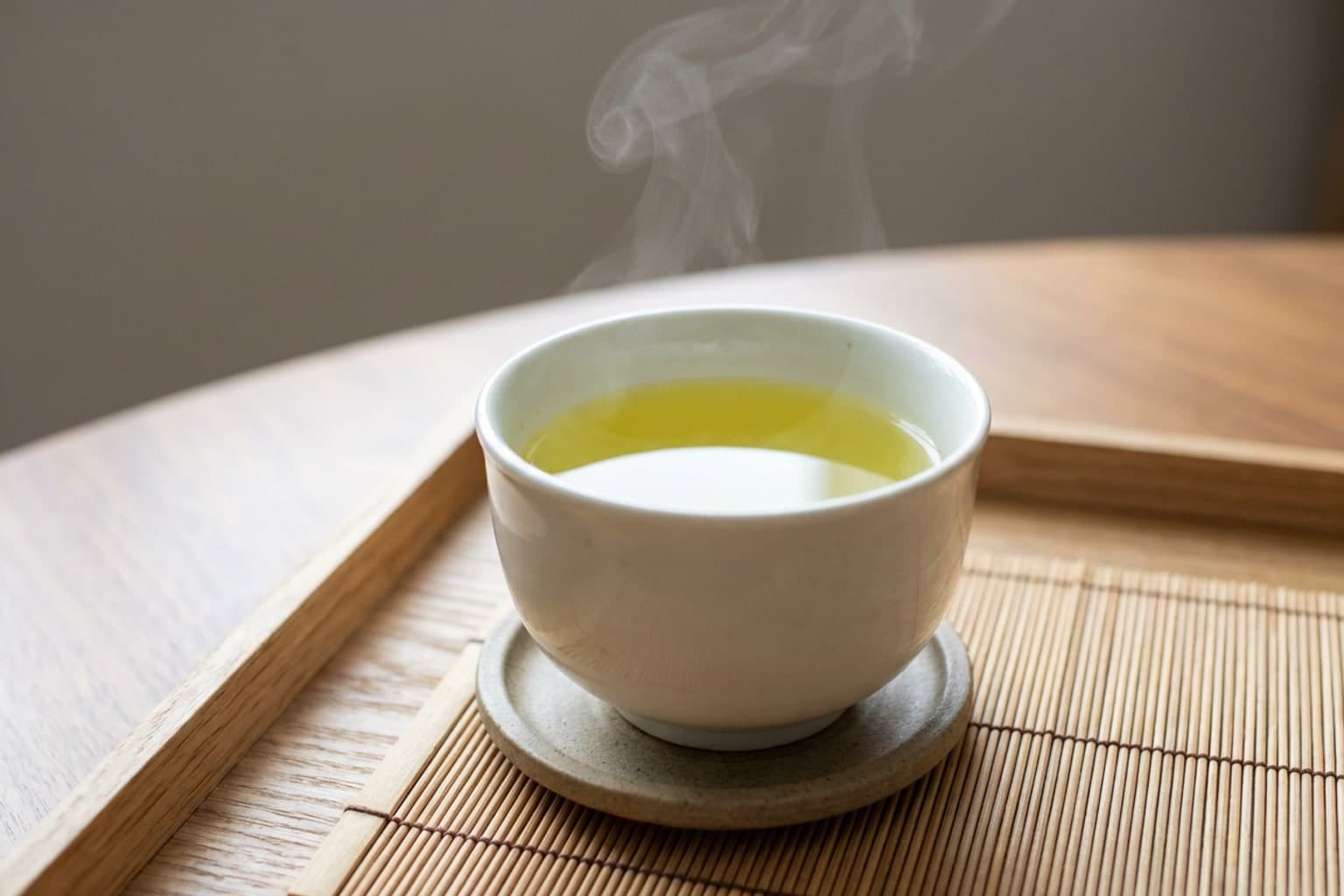
Halfway across the globe, the Classic Sencha Tea of Japan offers an entirely different sensory experience, yet it relies on the same fundamental ingredients: water and sencha green tea leaves. In Japan, the alchemy is governed by the philosophy of mindfulness. The water, precisely temperature-controlled, meets the vibrant, steamed green leaves to produce a liquor that is pale, vegetal, and brimming with the bright essence of the spring harvest. Where the Turkish approach emphasizes depth and dark, oxidized strength, the Japanese tradition celebrates the delicate, fresh life of the leaf.
The shared ingredient list—water and tea leaf—is deceptively simple, yet it hides a complex chemical narrative. It is wild to consider that the same basic components, when manipulated through different heat profiles and oxidation levels, yield such wildly divergent flavor profiles. In Turkey, the reliance on fully oxidized leaves creates a tannic intensity, while in Japan, the preservation of the leaf's integrity through gentle steaming maintains a grassy, amino-acid-rich brew. Despite this chemical divergence in the end product, the starting point remains identical: pure water and the leaves of the Camellia sinensis.
It is tempting to look for a historical link, a phantom thread of trade that might explain this coincidence, but history suggests otherwise. Turkish Black Tea (Çay) emerged from a long tradition of coffee drinking, transitioning only in the 20th century, while the Classic Sencha Tea has roots deep in centuries-old Japanese ceremony and agricultural refinement. There is no shared lineage here, only a shared human realization: that the infusion of dried leaves into hot water is one of the most efficient and satisfying ways to engage with the natural world.
We often celebrate the complexity of modern cooking, the twenty-ingredient spice blends, and the sous-vide contraptions that dominate our kitchens. However, the success of Turkish Black Tea (Çay) and Classic Sencha Tea proves that innovation does not always mean addition. Sometimes, innovation is simply finding the perfect balance between two elements. By focusing solely on the quality of water and the integrity of the leaf, both cultures reached a pinnacle of beverage preparation that needs no embellishment to be perfect.
Looking at these two drinks side by side, we are reminded that geography may define our borders, but curiosity defines our habits. Whether you find yourself holding a small, tulip-shaped glass of steaming Turkish black tea or a ceramic cup of vibrant green Japanese sencha, you are participating in a global conversation. It is a conversation about the beauty of simplicity and the strange, wonderful luck of having evolved toward the same quiet, restorative ritual independently, separated by vast oceans but united by the elegant simplicity of tea.