By eatmundo · July 12, 2026
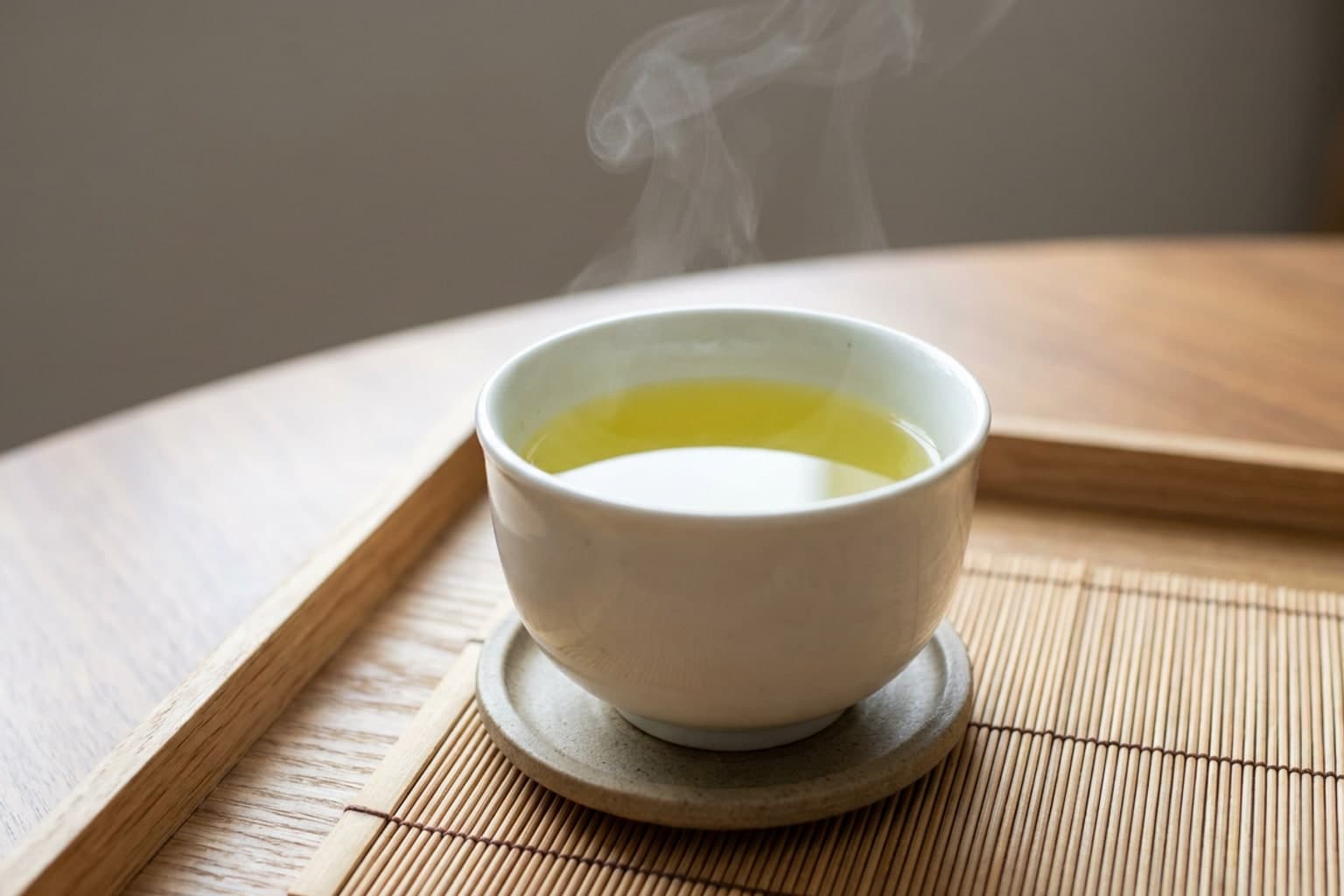 🇯🇵AI-generated image
A refined, vibrant green tea that captures the essence of Japanese spring mornings. It offers a perfect harmony of grassy umami and gentle astringency.
Ingredients
tick what you already have - the rest goes on your shopping listHow to Make It
- 1
Heat 200ml of filtered water in a kettle until it reaches precisely 80°C to avoid scalding the leaves.
- 2
Place 5g of high-quality sencha leaves into your kyusu (Japanese teapot) to prepare for brewing.
- 3
Pour the water gently over the leaves, ensuring they are fully submerged but not agitated too harshly.
- 4
Cover the teapot and let the leaves steep undisturbed for exactly 60 seconds to extract the ideal flavor profile.
- 5
Give the teapot a very gentle circular swirl to distribute the strength of the tea before pouring.
- 6
Pour the tea into a cup in small amounts, alternating between cups if serving multiple, to ensure a uniform flavor.
- 7
Drain the teapot completely, down to the very last drop, to prevent the leaves from over-steeping.
- 8
Enjoy the tea while hot, noticing the vibrant yellow-green color and fresh, oceanic aroma rising from the cup.
Frequently Asked Questions
What is Sencha?
Sencha is a Japanese green tea made from steamed and rolled tea leaves. It is a popular, daily-consumed beverage valued for its refreshing flavor profile.
What is the ideal water temperature for brewing sencha?
Use water between 70°C and 80°C (160°F–175°F) to avoid extracting excessive bitterness from the leaves.
How long should I steep the sencha leaves?
Steep for exactly 60 seconds for the first infusion to ensure a balanced, sweet, and umami-rich flavor profile.
What is the correct ratio of tea leaves to water?
A standard ratio is 5g of sencha leaves for every 200ml of water.
Why does my sencha taste bitter?
Bitterness usually occurs if the water is boiling or if you steep the leaves for longer than one minute.
🇯🇵AI-generated imageMundo algorithm is scanning the globe for a +50% match...