By eatmundo · July 12, 2026
 🇯🇵AI-generated image
Same ingredients, elsewhere in the world
1 matchDishes from other countries' kitchens, made from the same core ingredients as Warabi Mochi (Bracken Starch Jelly). The percentage is the share of ingredients the two recipes have in common.
Same technique: Starch gel3 recipes from 3 countries
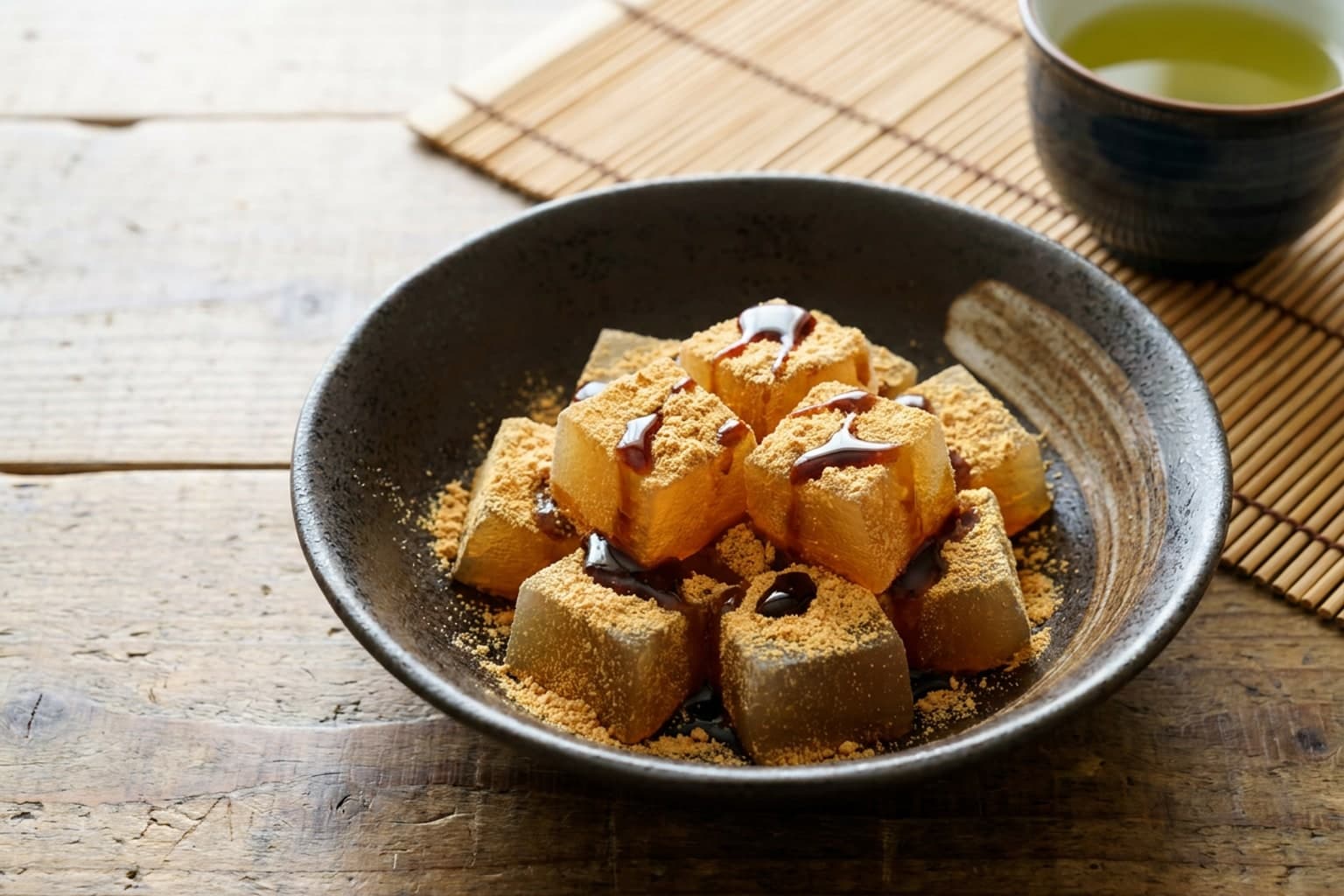
This cooling, translucent treat is a summer favorite. Unlike chewy rice mochi, it has a jelly-like texture that slides down the throat, coated in nutty kinako and sweet brown sugar syrup.
According to eatmundo's ingredient comparison, the closest dish to Warabi Mochi from another cuisine is Injeolmi (South Korea): the two share 57% of their ingredients.
Ingredients
tick what you already have - the rest goes on your shopping listHow to Make It
- 1
In a medium pot, whisk 150g warabi starch, 50g sugar, and 600ml water until perfectly smooth and no lumps remain.
- 2
Place the pot over medium-low heat and stir constantly with a silicone spatula for 8-10 minutes until it becomes thick and semi-transparent.
- 3
Transfer the hot mixture into a square glass dish rinsed with water and left wet, and spread it evenly to a 2cm thickness.
- 4
Let the jelly cool at room temperature for at least 60 minutes until set and firm. Do not refrigerate it for long, because cold makes the starch harden.
- 5
Prepare a clean tray by dusting the surface generously with 2 tbsp of kinako powder.
- 6
Turn out the chilled jelly onto the kinako-dusted tray and cut into 3cm cubes.
- 7
Roll each cube in the powder to ensure they don't stick to each other.
- 8
Place the cubes in a serving dish and top with the remaining kinako and a drizzle of 2 tbsp kuromitsu syrup.
- 9
Serve immediately, at room temperature or lightly cooled, to enjoy the soft, wobbly, refreshing texture.
Frequently Asked Questions
What is Warabi Mochi?
Warabi mochi is a chilled Japanese confection made from bracken starch, sugar, and water. It is typically consumed as a dessert during warmer months, served coated in kinako soybean flour and drizzled with kuromitsu syrup.
Can I substitute potato starch if I cannot find authentic bracken starch (warabiko)?
Yes, potato starch or tapioca starch are common substitutes that provide a similar translucent, chewy texture.
How do I know when the starch mixture has reached the perfect consistency?
The mixture is ready when it becomes thick, glossy and semi-transparent. This usually takes 8 to 10 minutes of constant stirring over medium-low heat.
Why did my Warabi Mochi become hard after refrigerating it?
Warabi mochi is best served at room temperature or only lightly cooled. Long refrigeration causes the starch to retrograde and lose its signature soft, bouncy texture, so let it set at room temperature and eat it the same day.
How can I prevent the mochi from sticking to the bowl or my hands during preparation?
Dust your work surface, knife, and hands generously with kinako powder before handling the jelly to prevent it from adhering to surfaces.
🇯🇵AI-generated image