By eatmundo · August 3, 2026

Same ingredients, elsewhere in the world
3 matchesDishes from other countries' kitchens, made from the same core ingredients as Saba no Nitsuke. The percentage is the share of ingredients the two recipes have in common.
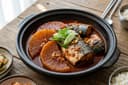 Godeungeo-jorim (Braised Mackerel)In South Korea · same ingredients· Same technique57%
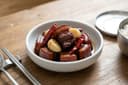 Jang-Jorim (Soy-Braised Pork)In South Korea · same ingredients57%
 Jang-Jorim (Soy-Braised Beef)In South Korea · same ingredients50%
Mackerel simmered in a rich, syrupy soy and ginger reduction. This traditional home-cooking dish transforms the oily, strong-flavored mackerel into a tender, balanced delight.
According to eatmundo's ingredient comparison, the closest dish to Saba no Nitsuke from another cuisine is Godeungeo-jorim (South Korea): the two share 57% of their ingredients.
Ingredients
tick what you already have - the rest goes on your shopping listHow to Make It
- 1
Score the skin of the mackerel fillets with a shallow 'X' pattern to help the flavor penetrate.
- 2
Blanch the mackerel in boiling water for 30 seconds to remove any strong fishy odors, then gently pat dry.
- 3
Slice the ginger into thin coins or matchsticks to infuse the sauce with its sharp, clean heat.
- 4
In a shallow pan, combine sake, water, sugar, soy sauce, and mirin, bringing it to a boil over medium-high heat.
- 5
Carefully add the mackerel fillets skin-side up into the pan alongside the ginger slices.
- 6
Place a 'drop lid' (oshibuta) or a piece of parchment paper with a hole in the center directly onto the fish to ensure even cooking.
- 7
Simmer on medium-low heat for 12 minutes, spooning the syrupy sauce over the fish periodically until it thickens and glazes the meat.
- 8
Transfer the fish to a plate, drizzle with the remaining reduction, and serve immediately.
Frequently Asked Questions
What is Saba no Nitsuke?
Saba no Nitsuke is a Japanese dish consisting of mackerel simmered in a savory broth of soy sauce, sake, mirin, sugar, and ginger. It is typically served as a main protein for lunch or dinner, usually accompanied by steamed rice and miso soup.
Why blanch the fish?
Mackerel has a strong scent; blanching effectively neutralizes it and firms up the flesh for better texture.
Can I use other fish?
Sardines or horse mackerel are excellent alternatives that work well with this robust ginger-soy profile.
What if I don't have a drop lid?
A circle of parchment paper with small holes cut out works perfectly to circulate the sauce evenly.
Is the fish meant to be very soft?
The long simmer in the liquid makes the fish tender, almost falling apart; handle it gently when plating.