By eatmundo · August 3, 2026
 🇯🇵AI-generated image
Same ingredients, elsewhere in the world
3 matchesDishes from other countries' kitchens, made from the same core ingredients as Mackerel Simmered in Ginger (Saba no Shōga-ni). The percentage is the share of ingredients the two recipes have in common.
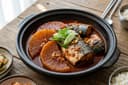 Godeungeo-jorim (Braised Mackerel)In South Korea · same ingredients· Same technique57%
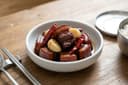 Jang-Jorim (Soy-Braised Pork)In South Korea · same ingredients57%
 Jang-Jorim (Soy-Braised Beef)In South Korea · same ingredients50%
A classic home-style Japanese fish dish where oily, flavorful mackerel is simmered in a sweet and salty soy broth infused with fresh ginger.
According to eatmundo's ingredient comparison, the closest dish to Mackerel Simmered in Ginger from another cuisine is Godeungeo-jorim (South Korea): the two share 57% of their ingredients.
Ingredients
tick what you already have - the rest goes on your shopping listHow to Make It
- 1
Clean 2 mackerel fillets and make a shallow 'X' cut on the skin side to help flavors penetrate.
- 2
Bring 1 litre of water to a boil and blanch the fish fillets for 30 seconds, then immediately remove to a plate to reduce any fishy odor.
- 3
In a shallow frying pan, combine 100ml water, 50ml soy sauce, 50ml mirin, 50ml sake, and 15g sugar over medium heat.
- 4
Slice 20g ginger into thin matchsticks and add to the pan.
- 5
Once the sauce begins to bubble, carefully place the fish fillets skin-side up into the pan.
- 6
Cover with a drop lid and simmer for 10-12 minutes, basting the fish with the sauce occasionally.
- 7
Remove the lid and increase the heat slightly for 2 minutes to thicken the sauce until it coats the fish beautifully.
- 8
Transfer to a serving dish and pour the remaining glaze over the top.
Frequently Asked Questions
What is Saba no Shōga-ni?
Saba no Shōga-ni is a simmered, nitsuke-style Japanese dish: mackerel simmered in water, soy sauce, mirin, sake and sugar with ginger, then reduced to a glaze. It is a staple of home cooking, typically served as a main course with steamed rice and miso soup.
Why blanch the fish?
Blanching removes excess fat and strong 'fishy' odors, resulting in a cleaner final flavor.
Can I replace sake?
Dry white wine is a decent substitute, but sake is preferred for its specific amino acid profile.
How do I know it is done?
The flesh should be opaque and flake easily when touched with a fork.
Is the ginger edible?
Absolutely; it becomes tender and flavorful during the simmer and is a perfect accompaniment.
🇯🇵AI-generated image