By eatmundo · August 3, 2026

Same ingredients, elsewhere in the world
4 matchesDishes from other countries' kitchens, made from the same core ingredients as Hakka Steamed Pork Belly (Mei Cai Kou Rou). The percentage is the share of ingredients the two recipes have in common.
 Korean Braised Pork BellyIn South Korea · same ingredients· Same technique57%
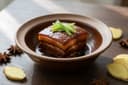 Dongpo Pork Belly (Dongpa-yuk)In South Korea · same ingredients57%
 Hokkien Soy-Braised BeefIn Malaysia · same ingredients53%
A comforting Hakka classic where tender pork belly is steamed until melt-in-the-mouth, absorbing the savory, earthy depth of preserved mustard greens. The resulting dish is rich, aromatic, and perfectly balanced.
According to eatmundo's ingredient comparison, the closest dish to Hakka Steamed Pork Belly from another cuisine is Korean Braised Pork Belly (South Korea): the two share 57% of their ingredients.
Ingredients
tick what you already have - the rest goes on your shopping listHow to Make It
- 1
Blanch 600g pork belly in boiling water for 5 minutes to remove impurities.
- 2
Pat the pork dry and sear the skin side in a hot pan with a drop of oil until golden brown.
- 3
Slice the pork into 1cm thick uniform pieces.
- 4
Soak the 200g preserved mustard greens in water to remove excess salt, then rinse and squeeze dry.
- 5
Sauté the greens with ginger and aromatics in a wok for 3 minutes until fragrant.
- 6
Arrange pork skin-side down in a deep bowl and top with the stir-fried greens.
- 7
Pour the mixture of soy sauce, wine, and sugar over the bowl.
- 8
Steam the bowl in a steamer over high heat for 90 minutes until the pork is incredibly tender, then invert onto a plate to serve.
Frequently Asked Questions
What is Mei Cai Kou Rou?
Mei Cai Kou Rou is a Hakka braised pork belly dish originating from China. It consists of pork belly steamed with preserved mustard greens, soy sauce, Shaoxing wine, and spices, and is typically served as a main course during festive meals or family gatherings.
Why do I sear the pork skin?
Searing gives the skin a beautiful color and a slightly chewy texture that contrasts perfectly with the tender fat.
Can I use fresh mustard greens?
No, this dish specifically relies on the unique fermented, salty, and earthy profile of preserved mustard greens (mei cai).
How do I know the pork is done?
The pork should be tender enough to be pierced easily with a chopstick, and the fat should appear translucent.
Is the rock sugar necessary?
Yes, it provides a subtle, mellow sweetness that balances the saltiness of the preserved greens perfectly.