By eatmundo · August 3, 2026
 🇯🇵AI-generated image
Same ingredients, elsewhere in the world
2 matchesDishes from other countries' kitchens, made from the same core ingredients as Gyuniku to Daikon Nimono (Beef and Daikon Radish Simmer). The percentage is the share of ingredients the two recipes have in common.
 Jang-Jorim (Soy-Braised Beef)In South Korea · same ingredients· Same technique57%
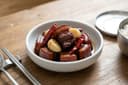 Jang-Jorim (Soy-Braised Pork)In South Korea · same ingredients50%
A comforting Japanese home-style stew where thin slices of beef are slowly braised with daikon until the radish becomes translucent and flavorful. The marriage of savory dashi-soy broth and the sweetness of the daikon is truly timeless.
According to eatmundo's ingredient comparison, the closest dish to Gyuniku to Daikon Nimono from another cuisine is Jang-Jorim (South Korea): the two share 57% of their ingredients.
Ingredients
tick what you already have - the rest goes on your shopping listHow to Make It
- 1
Cut 300g of beef brisket across the grain into thin 3mm slices, then cut them into bite-sized pieces. Peel 200g of daikon and slice it into 1cm thick half-moons.
- 2
Blanch the beef in a pot of 1 litre of boiling water for 30 seconds to remove impurities, then drain.
- 3
In a medium saucepan, combine 400ml dashi, 100ml sake, 60ml soy sauce, 50ml mirin, and 1 tbsp sugar over medium heat.
- 4
Add the daikon to the liquid and bring to a simmer for 10 minutes until it begins to soften.
- 5
Place the blanched beef and 20g of sliced ginger into the pan, ensuring the liquid covers everything.
- 6
Cover with an otoshibuta (drop lid) or a circle of parchment paper directly on the surface.
- 7
Simmer on low heat for 25 minutes, checking occasionally so the sauce doesn't evaporate too quickly.
- 8
Remove the lid and increase the heat slightly for 10 minutes, until the liquid reduces to a shiny glaze that coats the meat and daikon.
Frequently Asked Questions
What is Gyuniku to Daikon Nimono?
Gyuniku to Daikon Nimono is a Japanese simmered dish featuring beef brisket and daikon radish cooked in a broth of dashi, sake, soy sauce, mirin, sugar, and ginger. It is typically served as a savory side dish during family meals, especially throughout the autumn and winter seasons.
Can I use another cut of beef?
Yes, thinly sliced chuck or short rib works well, as they have enough fat to stay tender while simmering. Avoid lean cuts, which turn dry.
Why use a drop lid?
An otoshibuta ensures heat is distributed evenly and the daikon absorbs the flavor instead of breaking apart.
Should I peel the daikon?
Peeling is recommended to remove any bitterness from the skin, ensuring a clean flavor.
How long does this keep?
It stores well in an airtight container for up to 3 days; the flavor actually improves the next day.
🇯🇵AI-generated image