🇲🇾 Malaysia · Food
Lo Mai Gai (Steamed Glutinous Rice)
By eatmundo · August 4, 2026
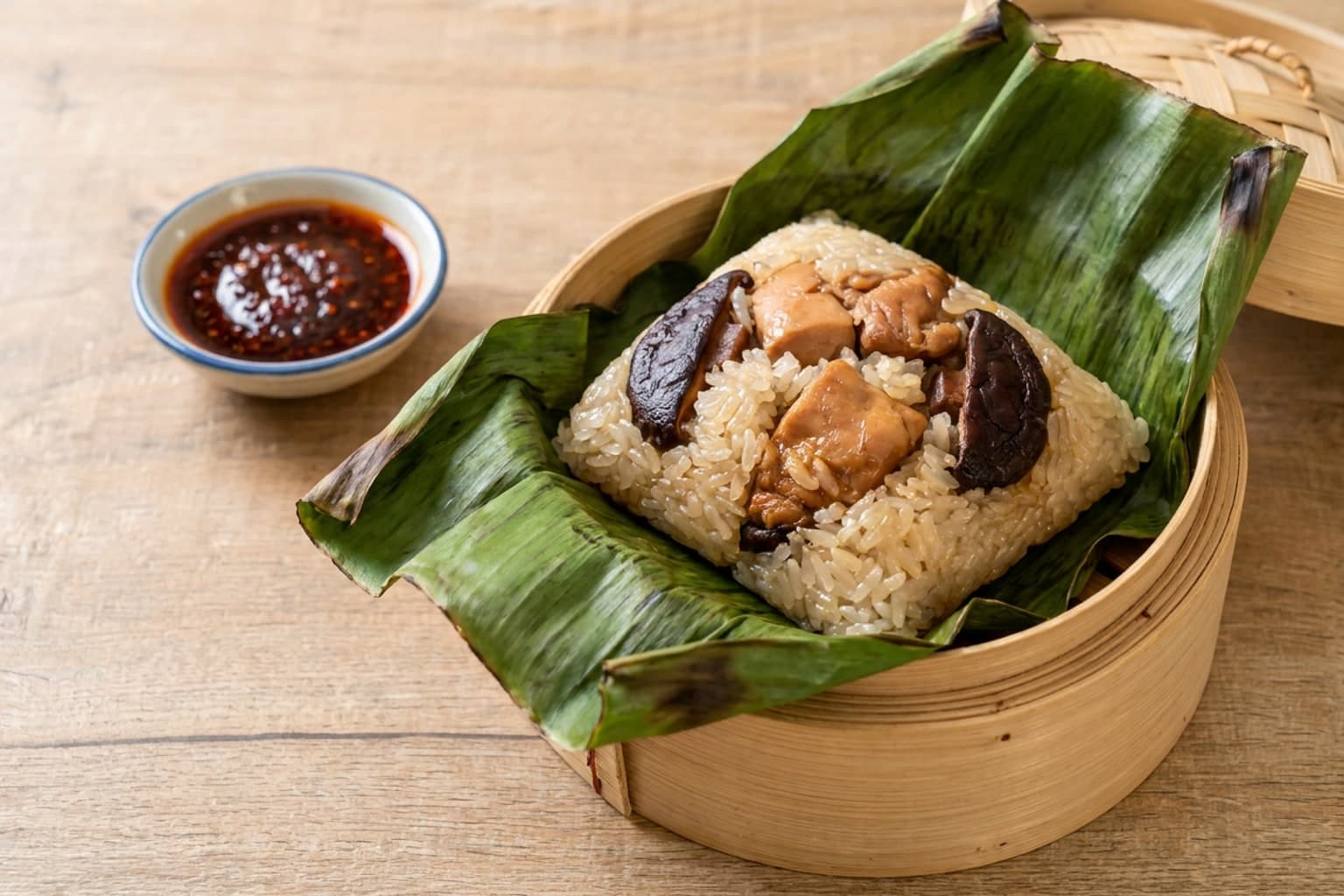 🇲🇾 MYAI-generated image
A classic savory delight featuring tender chicken and mushrooms encased in sticky rice and wrapped in fragrant lotus or banana leaves. These parcels are steamed until perfectly infused with savory aromatics.
Ingredients
check them off as you prepareHow to Make It
- 1
Soak 500g of glutinous rice in water for at least 4 hours to ensure a chewy texture.
- 2
Sauté minced shallots in 2 tbsp oil in a pan over medium heat until fragrant, then add the diced chicken.
- 3
Stir in the oyster sauce and soy sauce, cooking the chicken until it is 80% done; set aside to cool.
- 4
Drain the rice thoroughly and steam it in a steamer basket for 20 minutes until partially translucent.
- 5
Prepare 4 banana leaf squares by passing them briefly over an open flame to make them pliable.
- 6
Place a spoonful of rice in the center, add the chicken-mushroom mixture, and cover with more rice.
- 7
Fold the banana leaves into a tight square parcel, securing with string if necessary.
- 8
Steam the parcels in a large steamer over boiling water for another 25-30 minutes until the rice is fully soft and aromatic.
Frequently Asked Questions
What is Lo Mai Gai?+
Lo Mai Gai is a dish from Malaysia consisting of glutinous rice steamed with chicken, shiitake mushrooms, and savory sauces wrapped in a lotus or banana leaf. It is commonly consumed as a staple item during dim sum breakfast or lunch services.
Can I use normal long-grain rice?+
No, glutinous rice is essential for the characteristic sticky, chewy texture.
Do I have to use banana leaves?+
Banana leaves impart a unique grassy aroma; you can use parchment paper but the flavor will be less authentic.
How do I know when the rice is done?+
The rice should be soft, translucent, and slightly sticky when pressed.
Can these be frozen?+
Yes, steam them fully, let them cool, and freeze for up to one month.
🇲🇾 MYAI-generated imageMundo Match
This dish doesn't have a strong Mundo Match yet — but here's the closest ingredient overlap we found across the world's cuisines.