🇯🇵 Japan · Dessert
Ichigo Daifuku (Strawberry Mochi)
By eatmundo · July 9, 2026

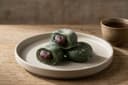
A delightful Japanese treat, Ichigo Daifuku features a perfectly ripe, sweet strawberry encased in smooth, subtly sweet red bean paste, all wrapped in a soft, chewy mochi shell. This vibrant dessert offers a wonderful contrast of textures and flavors, making each bite a harmonious experience.
Ingredients
check them off as you prepareHow to Make It
- 1
Begin by preparing your strawberries: Gently wash 6 medium-sized fresh strawberries and pat them completely dry with a paper towel. For the best presentation, hull them carefully, leaving a tiny bit of the green cap on, or remove it entirely if you prefer. Ensure they are bone dry, as any moisture can affect the mochi.
- 2
Next, portion your anko: Divide 180g of sweet red bean paste (anko) into 6 equal portions, roughly 30g each. Flatten each portion into a small disc (about 5cm diameter) in the palm of your hand, then carefully wrap it around a prepared strawberry, ensuring the strawberry is fully covered and sealed at the bottom. Set aside.
- 3
Now, prepare the mochi dough: In a large, microwave-safe bowl, combine 100g glutinous rice flour (mochiko), 30g granulated sugar, and 150ml water. Whisk these ingredients together until the mixture is completely smooth and lump-free. Don't worry if it seems a bit thin; it will thicken.
- 4
Cook the mochi: Cover the bowl loosely with microwave-safe plastic wrap. Microwave on high power for 1 minute. Carefully remove and, using a wet spatula, stir the dough vigorously until smooth. Re-cover and microwave for another 1 minute, stir again. Repeat this for a third minute. The dough should now be translucent, very sticky, and cohesive, pulling away from the sides of the bowl. Be careful, it will be very hot!
- 5
Cool and knead: Generously dust a clean work surface or a large baking sheet with about 50g of cornstarch. Carefully transfer the hot mochi dough onto the cornstarch. Allow it to cool for 2-3 minutes until it's safe to handle, then gently knead it a few times using more cornstarch to prevent sticking. This helps achieve a smooth, elastic texture.
- 6
Portion and shape mochi: Divide the slightly cooled mochi dough into 6 equal pieces. Take one piece and flatten it into a thin, round disc (about 10-12 cm in diameter) using your hands, ensuring both sides are well-dusted with cornstarch to prevent it from adhering to your fingers or the surface. Avoid making it too thin, or it might tear.
- 7
Assemble the daifuku: Place one anko-wrapped strawberry in the center of each mochi disc. Carefully bring the edges of the mochi up and around the strawberry, gathering and pinching them together firmly at the top to seal completely. Gently pinch off any small excess dough at the seam if necessary for a neat finish.
- 8
Finish and serve: Place each Ichigo Daifuku seam-side down on a small piece of parchment paper or a paper muffin liner. These are best enjoyed immediately to experience their softest texture. If not serving right away, store them in an airtight container at room temperature for up to one day; refrigeration can make the mochi hard.
Frequently Asked Questions
What is the best variety of strawberry for Ichigo Daifuku?+
Choose small to medium-sized, firm, and conical strawberries to ensure they fit easily inside the mochi dough without tearing it.
How do I prevent the red bean paste from sticking to my hands?+
Lightly dust your hands with cornstarch or use a thin plastic wrap to flatten the paste into a disc before wrapping it around the strawberry.
How long should I microwave the mochi dough to ensure it is cooked through?+
Microwave the mixture for about 2 minutes, stir well, then heat for another minute until it becomes translucent, glossy, and very sticky.
Can I store Ichigo Daifuku in the refrigerator?+
It is best eaten within a few hours of assembly; refrigeration causes the mochi skin to harden and turn chewy rather than soft and elastic.
Mundo Match
Dishes across the world that share Ichigo Daifuku (Strawberry Mochi)'s core ingredients.